
The Cameraman's Camera
Voices from ChernobylThis flow follows Sergei Gurin's struggle to film a catastrophe that looked deceptively ordinary and to acknowledge the lives beyond human-centered images.
increasing Bearing strength in each event
 decreasing
Bearing strength in each eventdecreasingLooking for Heroes
Looking for Heroes
Familiar Documentary Forms
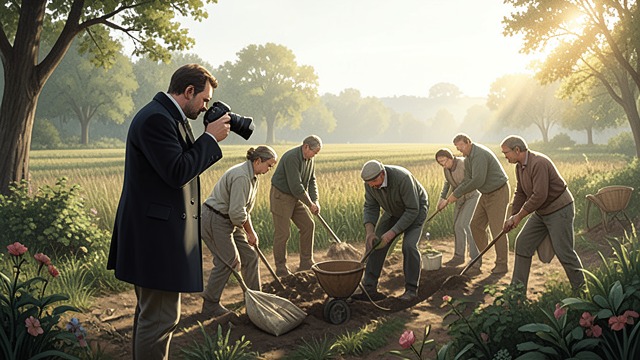
Sergei Gurin arrived expecting scenes that would resemble war films and patriotic documentaries. Instead he saw people working in gardens and ordinary landscapes that offered few dramatic images.
The Wrong Frame
Official filmmaking favored heroism and reassuring symbols. The camera could record a pretty scene without showing what made it dangerous.
An Odorless Garden
An Odorless Garden
Beauty Without Scent
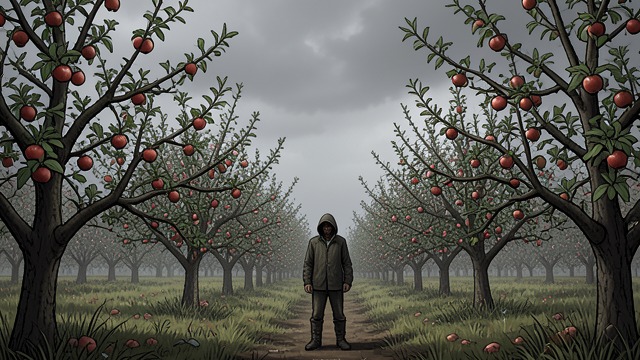
Gurin filmed apple trees in bloom but noticed that they had no smell. His senses suggested that something was wrong even when the image appeared beautiful.
The Limits of the Lens
Normal exposure and attractive footage could not make the scene true. The absence of an expected scent gave him a way to perceive the distance between recorded appearance and lived danger.
Filming the Evacuation
Filming the Evacuation
Learned Gestures
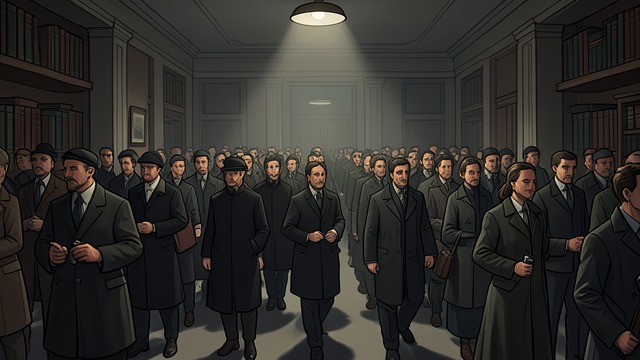
During the evacuation, people behaved in ways they recognized from war movies. Farewells, courage, and public composure offered ready-made forms for an event they could not understand.
A Performance of Continuity
Gurin saw how images and inherited stories shaped behavior. The camera recorded people reaching for familiar scripts as their ordinary lives were being broken apart.
The Question About Animals
The Question About Animals
A Child Asks
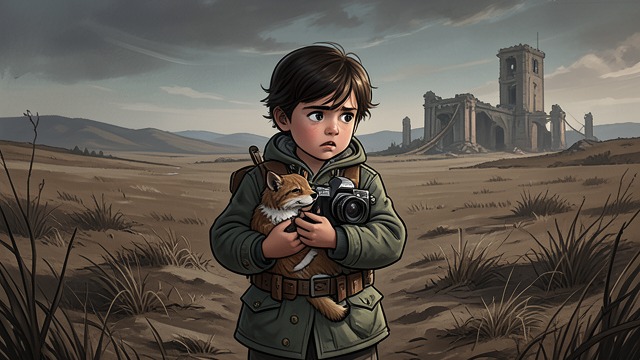
After Gurin showed his footage, a child asked why no one had helped the animals. The question exposed what his earlier human-centered work had failed to include.
A New Subject
Gurin began filming animals and imagining the zone from their perspective. His artistic attention shifted toward lives that had been treated as obstacles or cleanup problems.
The Film Not Yet Made
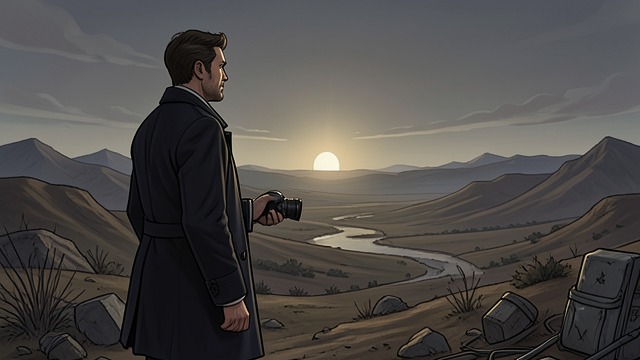
The Film Not Yet Made
A Project of Witnessing
Gurin wants to make a film about animals as hostages of human decisions. The project would challenge the assumption that only human suffering deserves sustained attention.
Art After the Disaster
His changing work reflects an incomplete moral response to Chernobyl. The camera becomes a tool not just for recording catastrophe but for reconsidering who counts as its victim.
The first weeks after the accident
May 1986
The first months after April 1986
Years after his first filming assignment
The interview's present
